
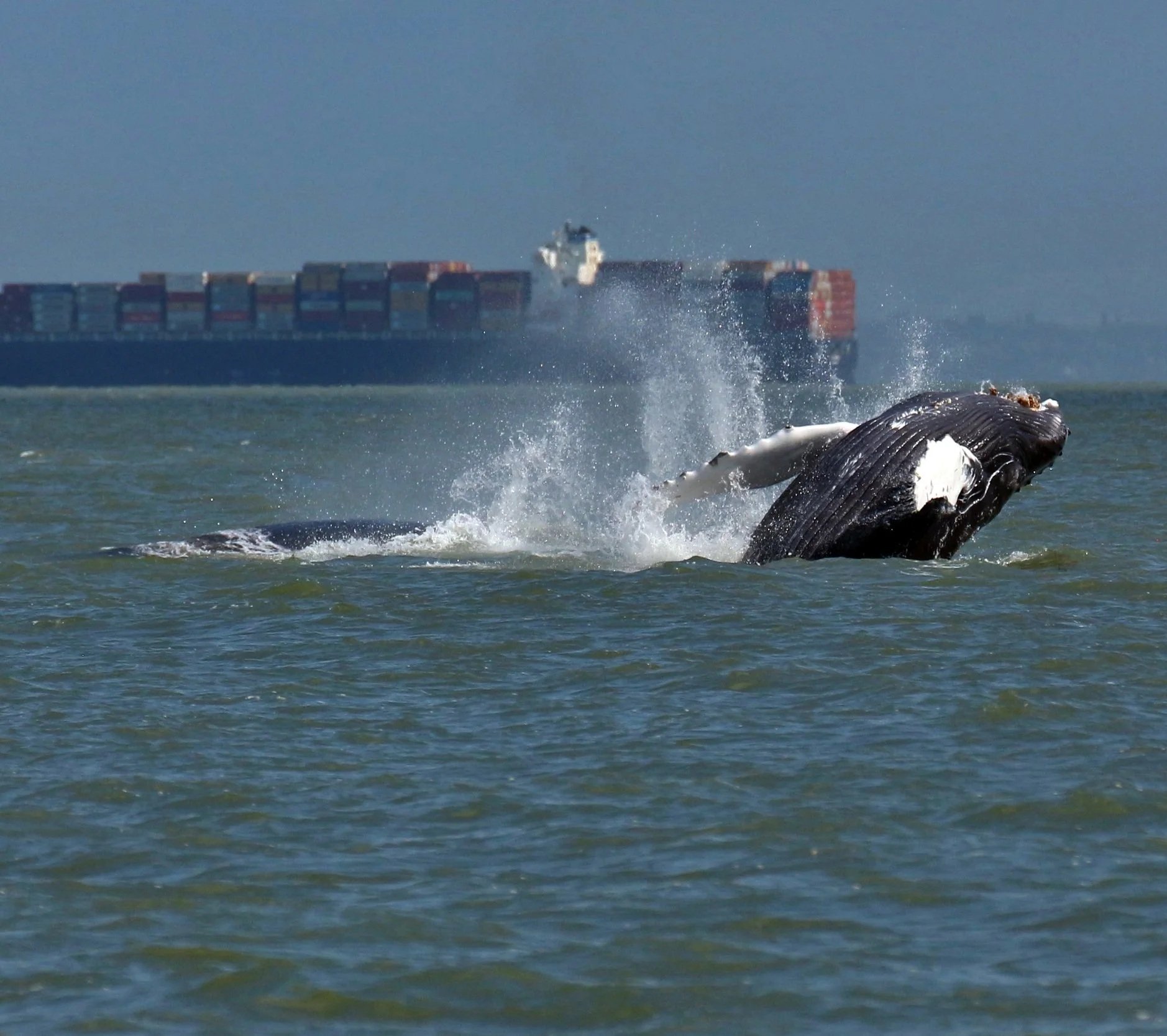
Acoustic Modelling
Predicting acoustic footprints of industrial operations
Numerical modelling reliably predicts long-range underwater sound propagation from industrial operations. Regulatory bodies are increasingly recognizing the power of these predictive tools and mandating their use in operational planning of operations. JASCO’s benchmarked algorithms and proprietary software solutions enable us to numerically model sound from:
Seismic survey sources such as airgun arrays, water guns, boomers, and vibroseis;
Active sonar and transducers such as sub-bottom profilers, multibeam sonar, and side-scan sonar;
Vessels such as survey vessels, icebreakers, tankers, tugs, and dynamic positioning thrusters;
Construction activities such as pile driving, drilling, blasting, dredging, rock dumping, and pipe laying.
We understand the complex theory, underlying assumptions, and limitations of each method; by applying consistently the most suitable estimation approaches to each project, we avoid pitfalls that could invalidate the conclusions of a study.
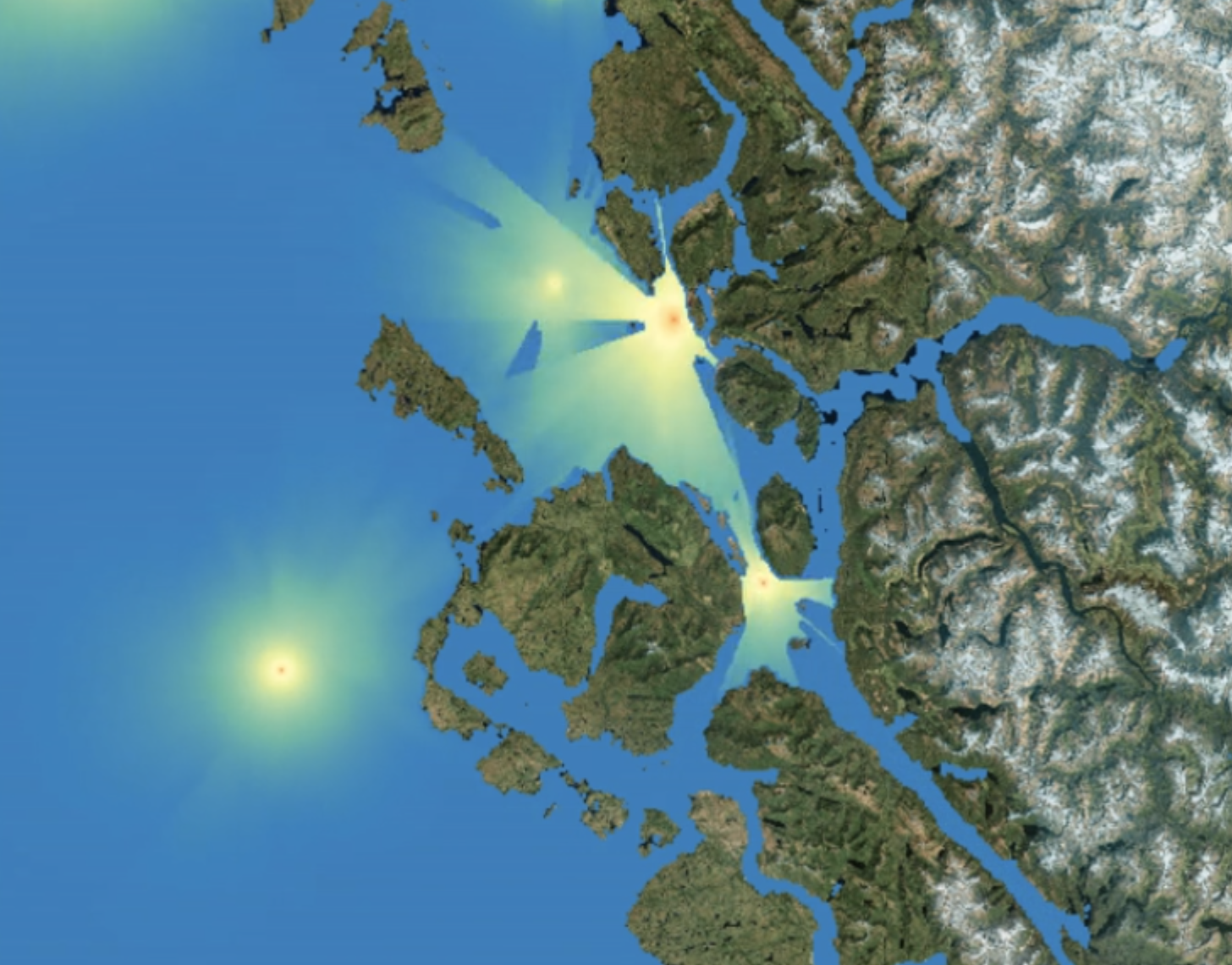
Advanced acoustic modelling algorithms
Our in-house numerical models have been applied to acoustic impact assessment and mitigation contexts worldwide. Our modelling algorithms have been benchmarked against test datasets. We continually develop and refine our acoustic models so they uphold all recognized standards in underwater and in-air acoustic modelling. Our models include:
Marine Operations Noise Model (MONM) for sound propagation at low and high frequencies;
Airgun Array Source Model (AASM) for acoustic signatures of seismic airgun arrays;
Full Waveform Range-dependent Acoustic Model (FWRAM);
VSTACK for precise close-range sound propagation;
JASCO Animal Simulation Model Including Noise Exposure (JASMINE);
Acoustic Real-time Exposure Model Incorporating Ambient (ARTEMIA);
Impulse Noise Propagation Model (INPM) for impulsive sounds in air.
Our models draw from our extensive database of industrial noise measurements stemming from more than 30 years of underwater acoustic data collection and analysis.
Actionable, understandable results
We explain our results in practical terms that relate directly to the operational scenarios and recommend the most effective mitigation methods. Where applicable, the modelled sound levels are interpreted considering the acoustic sensitivity specific to the biological receptors in the area including marine mammals, reptiles, and fish.
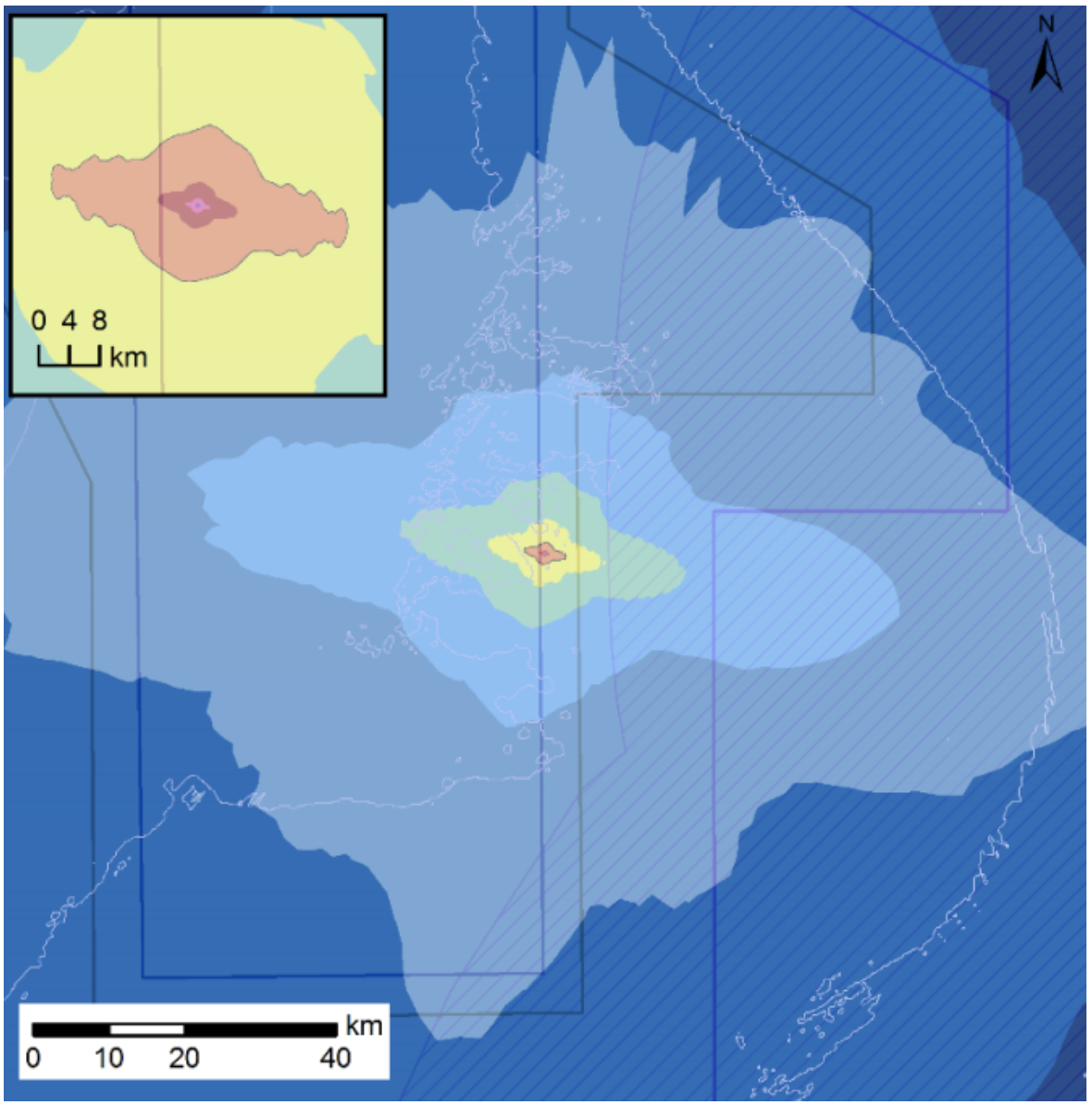
Our model results can be readily translated into exclusion zones/safety radii for use by marine mammal observers during ongoing operations. We provide sound level maps of affected areas that are easily interpreted by all project stakeholders.
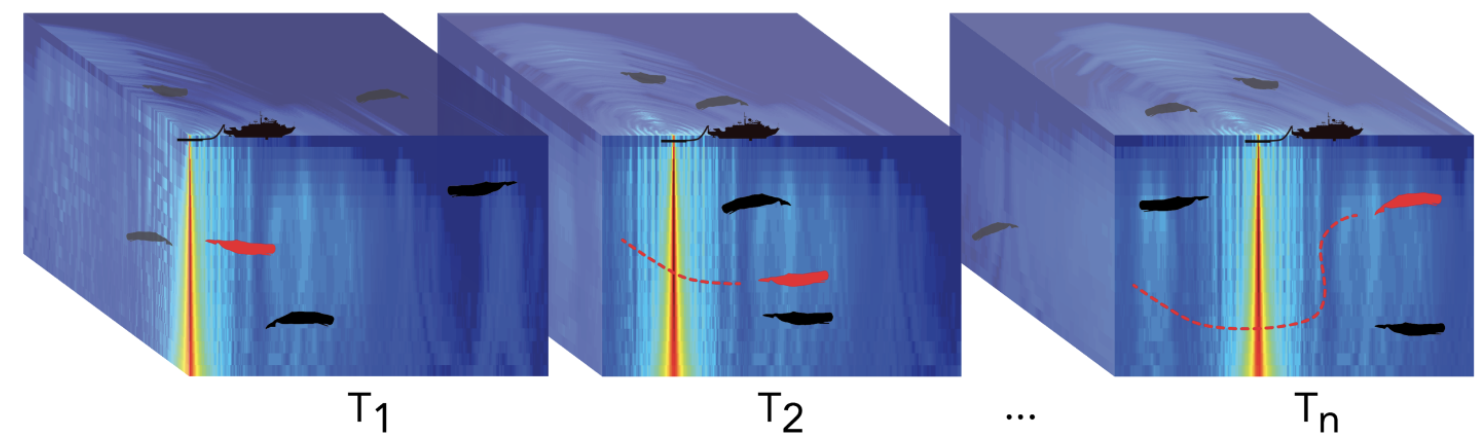
Animal movement modelling for impact assessment
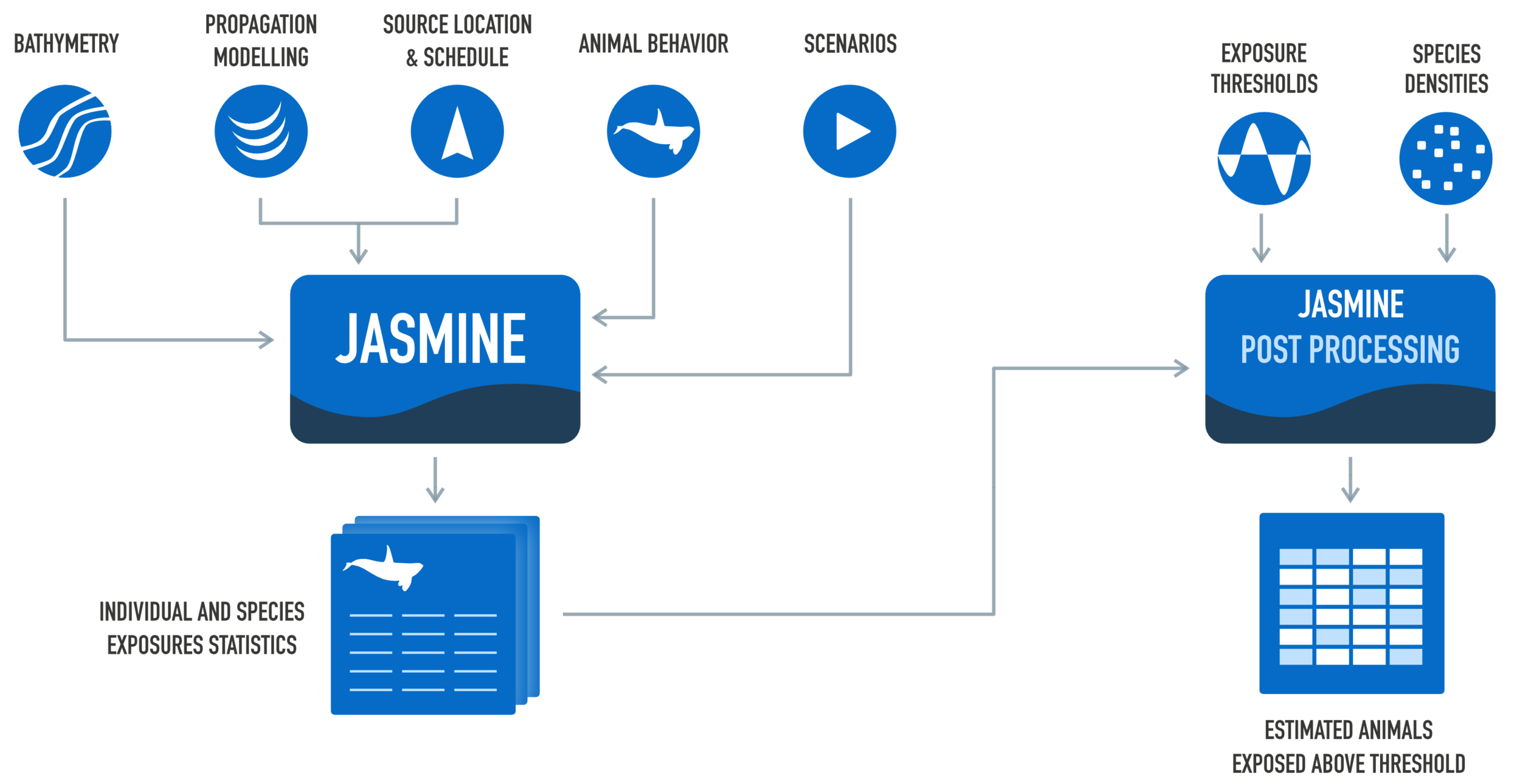
To predict acoustic impacts, we use a specialized software package (JASMINE), which incorporates the most current science on modelling aquatic species’ movement and behaviour, to expose simulated marine animals (called animats) to 3-D modelled sound fields. We determine the movement and behaviour parameters uniquely for each species from published studies on animal behaviour:
Direction of movement
Rates of lateral and vertical movement
Time spent at the surface between dives
Time spent at depth
Time spent in and between behavioural states (foraging, rest, play, and travel)
We model the acoustic exposure for each animat and compare it to exposure criteria to determine the probability of animals encountering various levels of acoustic exposure. These exposure probabilities provide a measure of the potential environmental impact of an acoustic source.
Learn more
January 2022 — California, U.S.A
Client: Vancouver Fraser Port Authority ECHO Program
An assessment of the predictive fit of the vessel noise functional regression model developed by JASCO and ERM on an independent database of vessel noise levels measured in the Santa Barbara Channel. The regression model was developed using the ECHO source level database, which comprises thousands of vessel transits recorded in Haro Strait, Strait of Georgia, and Boundary Pass. The models were able to predict monopole source levels well on the vessel category level.
A collaboration with Scripps Machine Listening Lab and ERM Consultants Canada Ltd.
Galactic Hybrid 2D MSS Enivronment Plan — Acoustic Modelling
September 2021 — Northern Australia
Client: Woodside Energy Ltd.
Appendix I – Acoustic Modelling for Assessing Marine Fauna Sound Exposures
A numerical modelling study of underwater sound levels associated with the planned marine seismic survey to assist in understanding the potential acoustic impact on receptors including marine mammals, fish, sea turtles, and invertebrates. Three seismic airgun array sources were modelled conducting 2D and 3D surveys in the Bonaparte Basin, and three of JASCO’s sound propagation models were used in combination to characterise the acoustic fields at short and long ranges at frequencies between 5 Hz and 25 kHz.
Bay du Nord Development Project Environmental Impact Assessment
July 2020 — Newfoundland, Canada
Client: Equinor Canada
Appendix L – Marine Mammals and Sound Sources in the Flemish Pass: Analysis from 2014 to 2017 Acoustic Recordings
Modelling and analysis studies for Equinor as part of their EIA for the proposed Bay du Nord Development Project, a floating offshore oil and gas production facility, 500 km east of Newfoundland. Modelled sources include an airgun array for seismic surveys, sub-bottom profiler and multibeam sonar for geohazard surveys, drillship, and the floating production, storage, and offloading facility. The analysis of four summers of acoustic recordings characterized the baseline soundscape, the presence of marine mammals, and the effects on the soundscape of Equinor’s 2014–2016 drilling program.